
What to do after a car accident, with your state's real rules
Plain steps for all 50 states and DC. Every rule is quoted from the law or the agency that enforces it, with a link, checked September 17, 2026.
Not a law firm. Nothing to sign up for.

The first hour after a crash
These steps apply in every state. Your state page adds the exact rules, like when police must be called and how long you have to file.
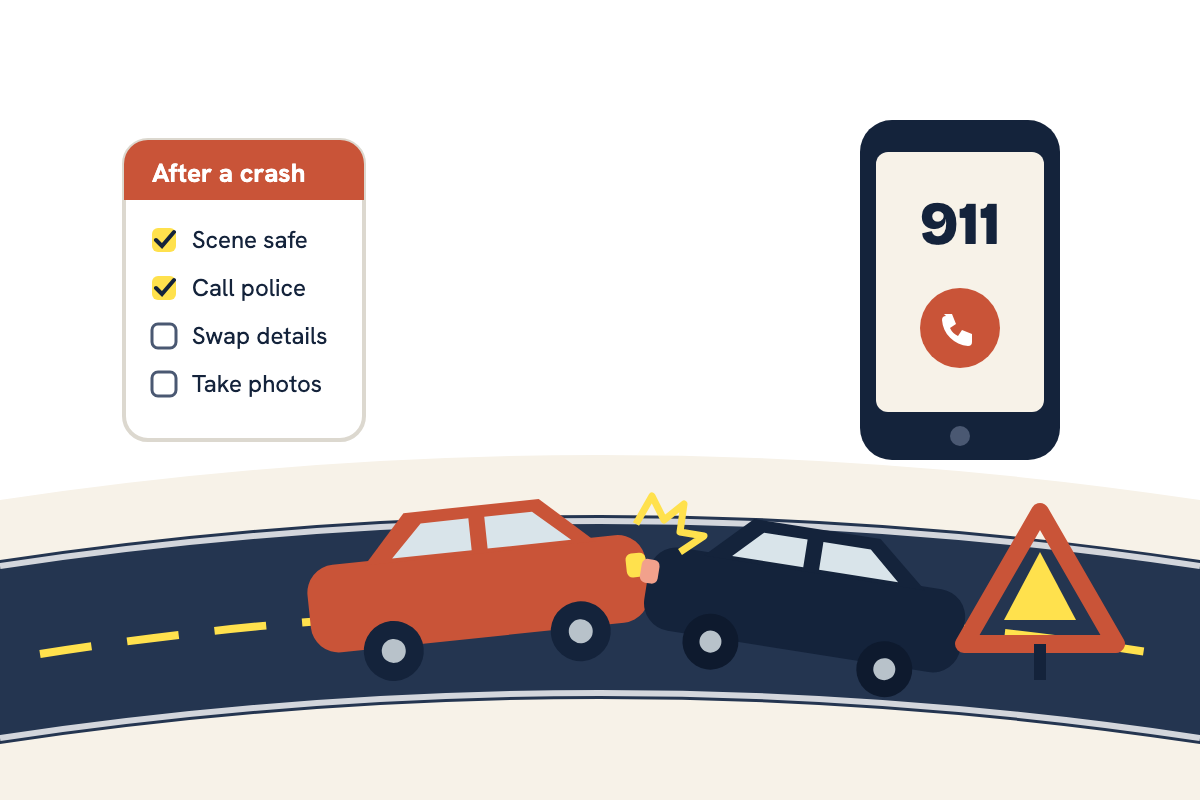
- 1
Make the scene safe
Turn on your hazard lights. If anyone is hurt, call 911 first and don't move an injured person unless there's danger, like fire.
- 2
Call the police
Most states require a police report when someone is hurt, and many require it for damage too. Your state page shows the exact rule.
Find your state - 3
Exchange information
Get the other driver's name, address, license plate, insurance company and policy number. Give yours. Don't argue about who caused it.
- 4
Take photos
Photograph both cars, the plates, the road, skid marks, traffic signs and any injuries. Write down names and numbers of witnesses.
- 5
Get checked by a doctor
Some injuries show up a day or two later. A same week visit also creates a record that links the injury to the crash.
- 6
Write down your deadlines
Every state sets a deadline to sue, and some set a much shorter one when a government vehicle or road is involved.
Find your state
Browse by question
Pick your state
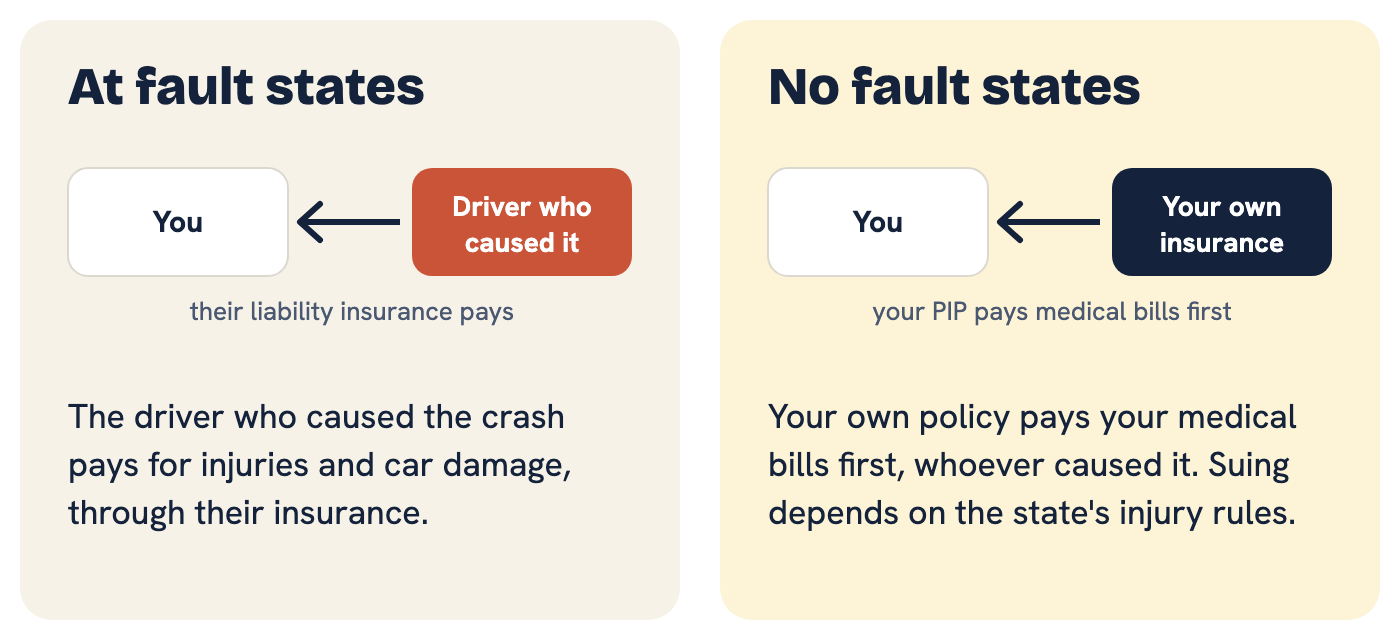
The tag shows how each state handles injury claims. In no fault states your own insurance pays first, no matter who caused the crash.
- AlabamaAt fault
- AlaskaAt fault
- ArizonaAt fault
- ArkansasAt fault
- CaliforniaAt fault
- ColoradoAt fault
- ConnecticutAt fault
- DelawareAt fault
- District of ColumbiaAt fault
- FloridaNo fault
- GeorgiaAt fault
- HawaiiNo fault
- IdahoAt fault
- IllinoisAt fault
- IndianaAt fault
- IowaAt fault
- KansasNo fault
- KentuckyChoice no fault
- LouisianaAt fault
- MaineAt fault
- MarylandAt fault
- MassachusettsNo fault
- MichiganNo fault
- MinnesotaNo fault
- MississippiAt fault
- MissouriAt fault
- MontanaAt fault
- NebraskaAt fault
- NevadaAt fault
- New HampshireAt fault
- New JerseyChoice no fault
- New MexicoAt fault
- New YorkNo fault
- North CarolinaAt fault
- North DakotaNo fault
- OhioAt fault
- OklahomaAt fault
- OregonAt fault
- PennsylvaniaChoice no fault
- Rhode IslandAt fault
- South CarolinaAt fault
- South DakotaAt fault
- TennesseeAt fault
- TexasAt fault
- UtahNo fault
- VermontAt fault
- VirginiaAt fault
- WashingtonAt fault
- West VirginiaAt fault
- WisconsinAt fault
- WyomingAt fault
We show you the law's own words
Most accident guides tell you to check your local laws. We did it for you: 897 rules across 51 jurisdictions, each quoted from one of 652 official pages and opened again by an automatic checker.
“shall immediately stop such vehicle at the scene of such accident or as close to the scene as possible”
Questions people ask us
Is Know My Claim a law firm?
No. We are an independent guide. We don't represent anyone, and reading a page here doesn't create a lawyer relationship.
Is this legal advice?
No. Each page explains what a state's law says and links to the law itself. For advice about your own crash, talk to a licensed lawyer in your state.
Where do the facts come from?
From state legislature statute sites, state insurance departments, motor vehicle agencies, state police and court rules. Every rule shows the exact words from the source and a link.
How current is it?
Every fact on the site was opened and checked on September 17, 2026. Each page shows that date, and each source link lets you confirm the rule has not changed.
Why is a topic missing for my state?
If we could not confirm a rule from an official source, we leave it out rather than guess. That is why some states have no section on moving your car or on medical payments coverage.
Do law firms pay to appear here?
Not today. If a firm ever sponsors a page, its box will be labeled Sponsored, it will sit after the steps, and it will never change what the steps say.
How do I report a mistake?
Email hello@knowmyclaim.com with the page and what looks wrong. We check the source again and fix the page.
Find your deadline before it passes
Some states give you one year to sue. Some give six months to notify a city or county.
See all 50 states and DC